Asunto del Collar
ART ESP / ING
El Instituto presenta una investigación histórica que revela la instrumentalización judicial del «Asunto del Collar» como golpe parlamentario contra la Corona de Francia
El Instituto hace público un riguroso estudio de investigación histórica y jurídica que redefine de manera sustancial la comprensión del célebre «Asunto del Collar de la Reina» (1785-1786). La obra demuestra que el proceso criminal no constituyó un mero fraude cortesano magnificado por libelos clandestinos, sino un dispositivo deliberado de subversión constitucional y fractura de la inmunidad regia, articulado por el Parlamento de París en connivencia con la facción orleanista y la casa de Rohan-Soubise.
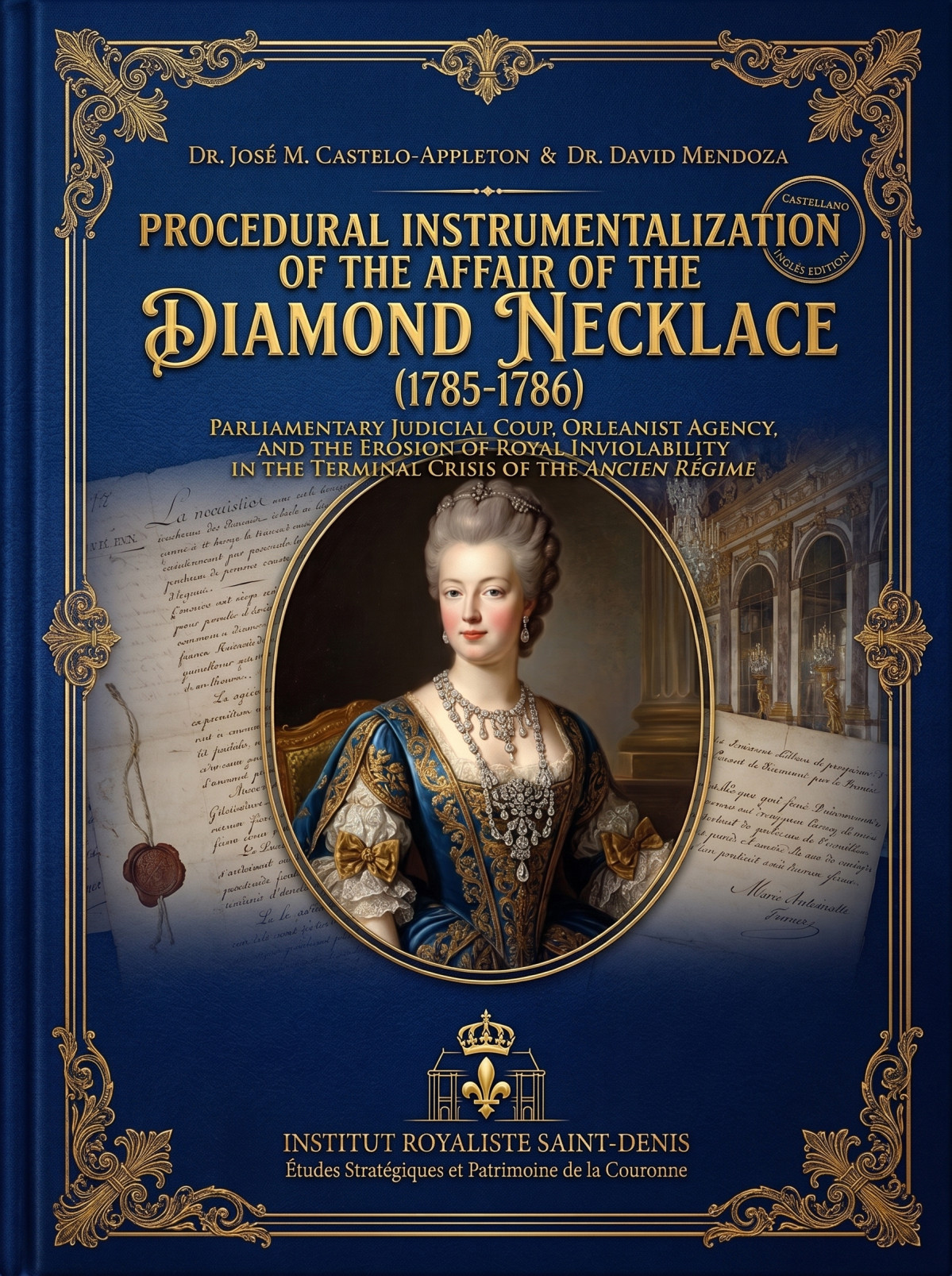
La investigación, titulada «La Instrumentalización Procesal del Asunto del Collar (1785-1786): Golpe Judicial Parlamentario, Agenciamiento Orleanista y la Erosión de la Inviolabilidad Regia en la Crisis Terminal del Antiguo Régimen», se fundamenta en el análisis directo de tres corpus documentales primarios: los registros criminales manuscritos del Parlamento de París custodiados en los Archives Nationales de Francia (Serie X2b), la colección completa de las memorias judiciales impresas (factums) de 1785-1786 y la correspondencia diplomática reservada de las embajadas de Madrid, Londres y San Petersburgo.
Aportaciones fundamentales de la investigación
El estudio evidencia que la determinación de Luis XVI de someter la causa a la jurisdicción ordinaria del Parlamento de París, mediante las cartas patentes del 5 de septiembre de 1785, constituyó un error procesal irreversible. Al restringir el sumario a los hechos de estafa y falsedad documental, excluyendo la figura de lesa majestad en segundo grado, la Corona entregó a la corte soberana el cauce legal idóneo para transformar el proceso en un juicio político indirecto contra la institución monárquica.
Entre las conclusiones críticas documentadas en la obra destacan:
- Vulneración coordinada del secreto sumarial: Las actas evidencian la filtración sistemática de las diligencias sumariales secretas por parte de magistrados de las cámaras de Enquêtes a los consejos letrados de la defensa, permitiendo calibrar los alegatos forenses para eludir la acusación penal.
- Construcción judicial de la verosimilitud moral: A través de los factums impresos, exentos de censura previa, la estrategia de la defensa desplazó la controversia desde el delito material hacia la credulidad inducida, consagrando ante el público la convicción de que los hábitos privados de María Antonieta hacían verosímil la negociación clandestina y la compra secreta de la joya.
- El fallo del 31 de mayo de 1786 como golpe judicial: El descargo pleno de acusación concedido al cardenal Louis de Rohan y la benévola pena de destierro impuesta al falsificador material de la firma regia operaron como una condena moral implícita contra la reina consorte, legitimando en sede judicial la sospecha de su venalidad y duplicidad.
- La fractura de la inviolabilidad regia: El recurso posterior de Luis XVI a una orden administrativa de destierro contra un prelado recién absuelto deslegitimó la autoridad monárquica ante la opinión pública y las cancillerías europeas, proyectando a la Corona como ejecutora de una venganza privada en desacato del máximo tribunal del reino.
Esta publicación reafirma el compromiso del Instituto con el avance de la investigación histórica rigurosa, la revisión crítica de fuentes archivísticas primarias y el análisis de las fracturas institucionales que precedieron a la crisis revolucionaria de 1789.
Para más información, consultas institucionales o solicitud de la monografía académica:
Secretaría de Publicaciones e Investigación
Girona / Paris – November 2026
The Institute Releases Historical Research Demonstrating the Judicial Weaponization of the "Diamond Necklace Affair" as a Parliamentary Coup Against the French Crown
The Institute announces the publication of a rigorous historical and legal research study that fundamentally redefines the institutional interpretation of the "Affair of the Diamond Necklace" (1785–1786). The work establishes that the criminal proceedings were not an episodic court scandal amplified by clandestine pamphlets, but a calculated mechanism of constitutional subversion and rupture of royal inviolability, executed by the Parlement of Paris in tactical alliance with the Orleanist faction and the House of Rohan-Soubise.
The monograph, entitled "The Procedural Instrumentalization of the Diamond Necklace Affair (1785–1786): Parliamentary Judicial Coup, Orleanist Agency, and the Erosion of Royal Inviolability in the Terminal Crisis of the Ancien Régime", is based on systematic scrutiny of three primary archival corpora: the manuscript criminal registers of the Parlement of Paris preserved in the Archives Nationales de France (Series X2b), the complete collection of printed legal briefs (factums) from 1785–1786, and confidential diplomatic dispatches from the embassies of Madrid, London, and Saint Petersburg.
Key Findings of the Investigation
The study demonstrates that Louis XVI’s decision to commit the case to the ordinary jurisdiction of the Parlement of Paris, through the letters patent of September 5, 1785, proved to be an irreversible procedural error. By confining the indictment to ordinary fraud and forgery while omitting statutory charges of lese-majesty, the Crown provided the sovereign court with the procedural avenue necessary to transform the trial into an indirect political indictment of the monarchy itself.
Principal insights documented in the study include:
- Systematic Breach of Preliminary Secrecy: Trial records demonstrate sustained communication between investigating magistrates of the Enquêtes chambers and defense barristers, leaking secret interrogations to coordinate the rhetoric of public forensic briefs.
- Construction of Moral Plausibility: Through printed legal briefs exempt from prior censorship, defense strategy shifted the legal axis from the material felony to excusable credulity, embedding the public conviction that Marie Antoinette’s private conduct rendered nocturnal rendezvous and covert transactions fully credible.
- The Decree of May 31, 1786, as a Judicial Coup: The full acquittal of Cardinal Louis de Rohan and the lenient sentence of perpetual banishment given to the royal signature forger operated as an implicit moral conviction of the Queen of France, legally validating circulating suspicions regarding her character.
- The Rupture of Royal Inviolability: The subsequent intervention by Louis XVI using an administrative order of exile against an acquitted prelate damaged monarchical authority across Europe, presenting the Crown as enforcing personal retribution in defiance of the sovereign judiciary.
This release reflects the Institute's ongoing focus on high-impact historiographical inquiry, critical archival examination, and the institutional analysis of constitutional crises during the late Ancien Régime.