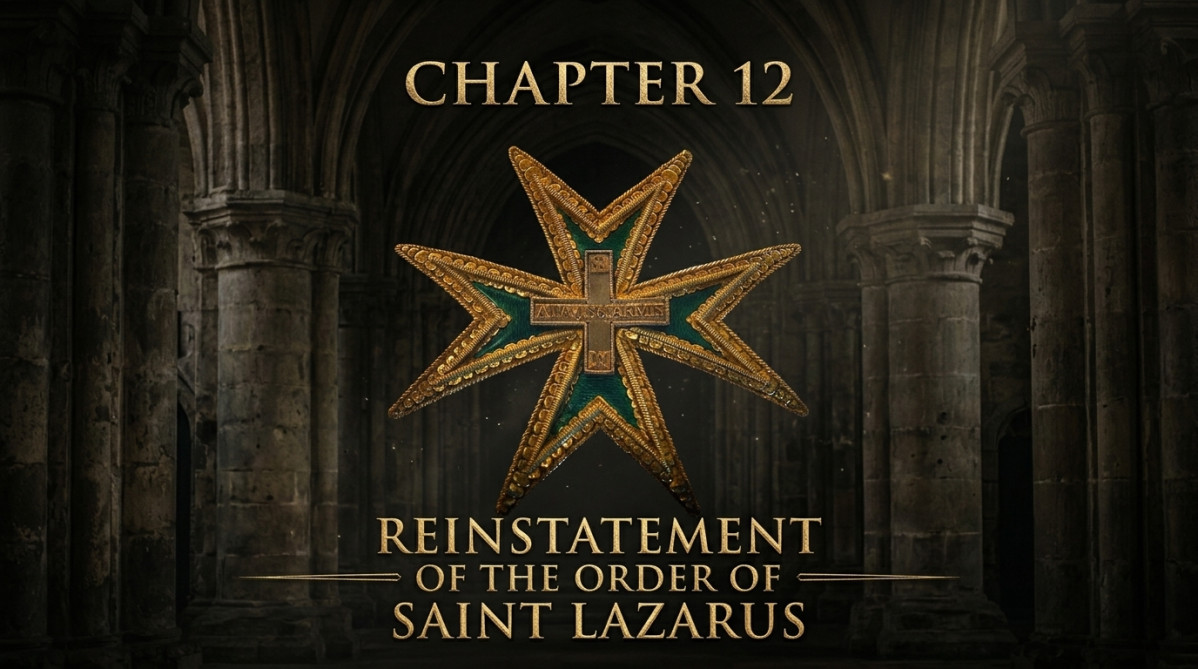
La supervivencia de las instituciones milenarias plantea interrogantes fascinantes sobre la naturaleza del poder, la legitimidad y la adaptabilidad humana. ¿Puede sobrevivir una orden con cuatrocientos años de antigüedad sin tener un trono físico? Esta es la premisa que define la trayectoria de la Orden de Nuestra Señora del Monte Carmelo y San Lázaro, una corporación que ha navegado a través de siglos de conflictos bélicos, revoluciones sociales y complejos laberintos legales para encontrar un nuevo propósito en la era contemporánea. Su historia no es simplemente la crónica de una reliquia del pasado, sino el testimonio de cómo la soberanía dinástica puede demostrar ser más resistente que las propias fronteras territoriales.
Para comprender el ADN de esta institución, es imperativo remontarse a sus orígenes y a la ingeniosa fusión orquestada por la monarquía francesa. La misión asistencial originaria de la Orden de San Lázaro nació en las afueras de Jerusalén durante el siglo XI, dedicada a la atención de los leprosos. Esta profunda tradición hospitalaria se encontró con la ingeniería real siglos después, fusionándose con el esplendor heráldico de la corona francesa. A principios del siglo XVII, tras la promulgación de la bula papal Romanus Pontifex por Paulo V en febrero de 1607, el rey Enrique IV tomó una decisión estratégica fundamental en octubre de 1608: decretó la unión de ambas entidades a perpetuidad bajo un único gran maestre. Esta maniobra política garantizó una sólida infraestructura económica y espiritual para la corporación.
---------------------
The survival of millennial institutions raises fascinating questions about the nature of power, legitimacy, and human adaptability. Can a four-hundred-year-old order survive without having a physical throne? This is the premise that defines the trajectory of the Order of Our Lady of Mount Carmel and Saint Lazarus, a corporation that has navigated through centuries of warfare, social revolutions, and complex legal labyrinths to find a new purpose in the contemporary era. Its history is not merely the chronicle of a relic from the past, but the testimony of how dynastic sovereignty can prove to be more resilient than territorial borders themselves.
To understand the DNA of this institution, it is imperative to trace back to its origins and the ingenious fusion orchestrated by the French monarchy. The original charitable mission of the Order of Saint Lazarus was born on the outskirts of Jerusalem during the 11th century, dedicated to the care of lepers. This deep hospitaller tradition met royal engineering centuries later, merging with the heraldic splendor of the French crown. In the early 17th century, following the promulgation of the papal bull Romanus Pontifex by Paul V in February 1607, King Henri IV made a fundamental strategic decision in October 1608: he decreed the union of both entities in perpetuity under a single grand master. This political maneuver guaranteed a solid economic and spiritual infrastructure for the corporation.