Legado y Disciplina: La Reconfiguración Institucional de la Nobleza Bajo la Casa de Borbón de la Marche y Borbón-Conti
ART ESP / ING
La historia de la nobleza europea, lejos de ser un relato estático de privilegios heredados, ha sido siempre una compleja coreografía de poder, legitimidad y responsabilidad. En un mundo donde la modernidad suele confundir la distinción aristocrática con una mera cuestión de linaje o protocolo, la investigación impulsada por la Casa de Borbón de la Marche y Borbón-Conti emerge como un recordatorio necesario sobre la verdadera naturaleza de las órdenes caballerescas: no como reliquias del pasado, sino como estructuras vivas de organización social y ética.
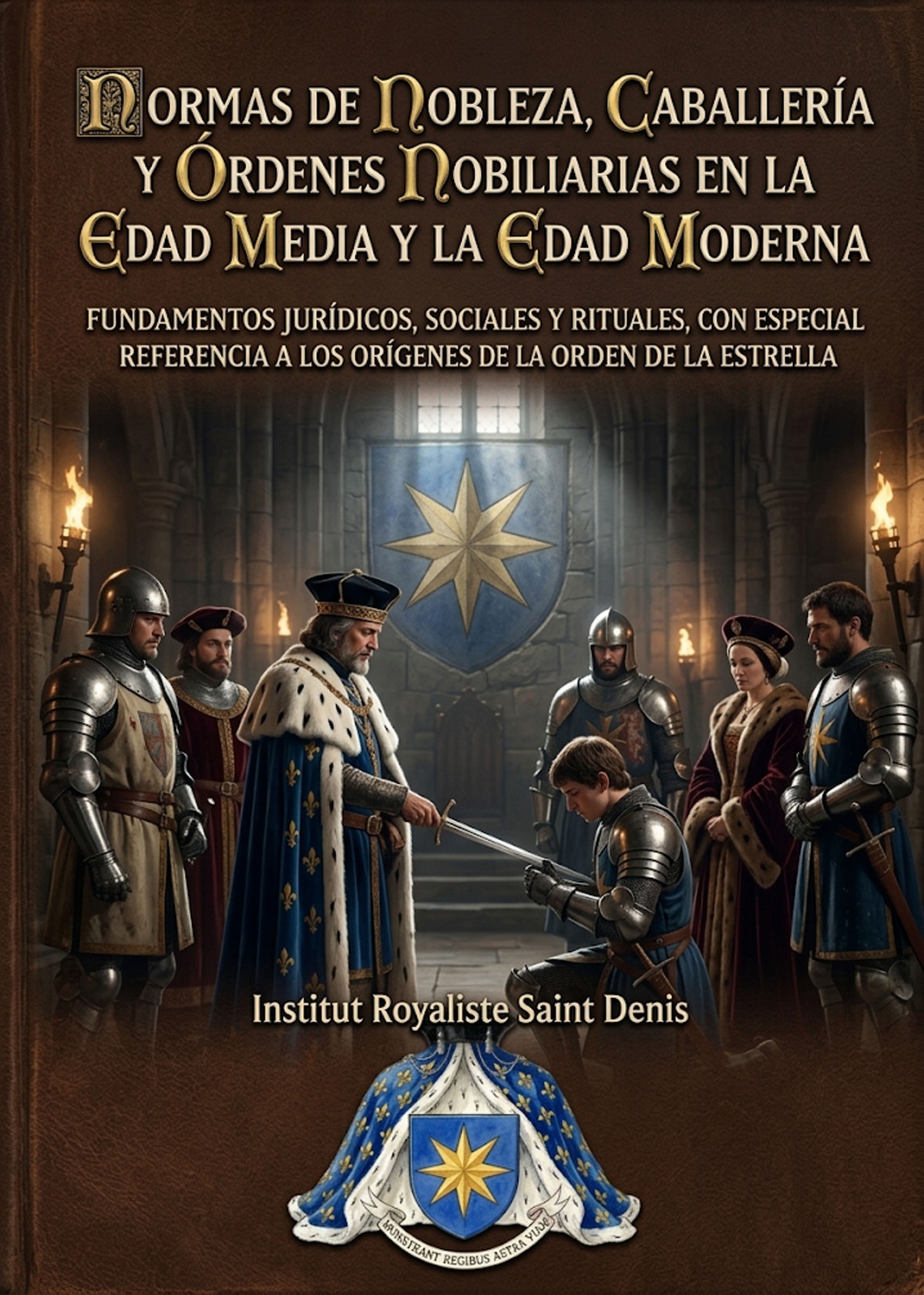
Este análisis histórico-jurídico no solo revisita los orígenes de la Orden de la Estrella —fundada por Juan II de Francia en 1351—, sino que plantea una interrogante fundamental para el siglo XXI: ¿cuál es el papel de la nobleza cuando el campo de batalla ha dejado de ser el terreno militar para convertirse en el de la integridad intelectual y el servicio público?
Palabras Clave
Nobleza europea, órdenes caballerescas, Orden de la Estrella, Casa de Borbón de la Marche y Borbón-Conti, estatutos nobiliarios, ética del honor, legitimidad histórica.
La construcción de una identidad colectiva
La investigación subraya una premisa historiográfica crucial: nobleza, caballería y órdenes caballerescas son realidades superpuestas, pero jurídicamente distintas. Mientras la nobleza definía una posición en la estructura social, la caballería constituía una cultura normativa, y las órdenes representaban la institucionalización del honor.
La Orden de la Estrella, nacida bajo el lema "Makstrant Regibus Aetra Vide", fue mucho más que una compañía de élite militar. Fue una herramienta de integración política y disciplinaria. Al estudiar sus orígenes, se observa cómo el soberano no buscaba únicamente aglutinar guerreros, sino crear una comunidad visualmente identificable, vinculada por juramentos comunes y normas estrictas de comportamiento. Los estatutos fundacionales, lejos de ser códigos éticos idealizados, operaban como instrumentos de ordenación social que convertían valores abstractos en obligaciones reconocibles.
El honor como carga, no como privilegio
El punto de mayor interés de la propuesta de la Casa de Borbón de la Marche y Borbón-Conti radica en la actualización de su código estatutario. Al restaurar la Orden, esta Casa ha trasladado el peso del honor desde la esfera del linaje o la apariencia hacia la esfera de la responsabilidad individual.
Bajo este nuevo enfoque, pertenecer a la Orden no confiere una patente de corso para la distinción social, sino que impone una "carga" de ejemplaridad. Este principio de "el honor como obligación" resuena con la tradición clásica de la caballería cristiana, pero se adapta a los desafíos de la contemporaneidad. La insignia de la estrella, en este contexto, no es una condecoración al mérito pasado, sino una brújula ética para el presente.
Del campo de batalla a la cátedra: El Juramento de Verdad
Uno de los aspectos más innovadores de la investigación presentada es la formalización del "Juramento de Verdad", particularmente diseñado para quienes acceden a la Orden desde el ámbito docente y académico. En una época marcada por la crisis de la integridad científica, el plagio y la desinformación, la Casa de Borbón de la Marche y Borbón-Conti propone una modernización del ideal caballeresco.
La defensa de la verdad científica, el rechazo a la manipulación de datos y la protección de la libertad de cátedra se configuran aquí como las nuevas formas de valor. El "Caballero de la Estrella" del siglo XXI sustituye la lanza por el rigor intelectual, entendiendo que su fidelidad no es ya hacia un soberano feudal, sino hacia los principios de la investigación honesta y el servicio magisterial. Este enfoque dota a la Orden de una relevancia institucional que trasciende el coleccionismo nobiliario, situándola en el corazón de la defensa de los valores universitarios y culturales.
El modelo comparado como base de legitimidad
El estudio no se aísla en la Orden de la Estrella, sino que se nutre de una comparativa necesaria con instituciones como la Orden de la Banda en Castilla o la Jarretera inglesa. Al contrastar estas estructuras, la investigación demuestra que las órdenes seculares de los siglos XIV y XV no fueron modas cortesanas, sino respuestas institucionales a la necesidad de las monarquías de organizar a las élites.
Este marco comparativo es el que permite a la Casa de Borbón de la Marche y Borbón-Conti legitimar su labor restauradora. Al apoyarse en una estructura que integra capítulos periódicos, ceremonial, simbología visual y juramentos de lealtad, la institución garantiza que su funcionamiento no sea una simulación, sino una réplica coherente de un modelo histórico de integración aristocrática.
La nobleza ante el espejo del siglo XXI
El análisis concluye que la nobleza, para sobrevivir como institución de valor en el mundo contemporáneo, debe comprenderse como una estructura de "producción de identidad". Lejos de la visión romántica que la reduce a un atavismo, la nobleza debe actuar como un mecanismo que convierte el prestigio en servicio.
La Casa de Borbón de la Marche y Borbón-Conti propone, a través de sus estatutos y su juramento, una nobleza que impone responsabilidad en lugar de conceder superioridad. Al vincular el nombre y las armas con una conducta social, profesional y ética intachable, la institución logra un equilibro difícil: mantener la continuidad histórica de la tradición caballeresca mientras adopta las demandas de honestidad y transparencia de la sociedad actual.
En última instancia, el valor de esta investigación reside en su capacidad de mirar al pasado para resolver una carencia presente: la necesidad de modelos de comportamiento que, amparados en el honor y la lealtad, sirvan como dique de contención frente a la mediocridad y la falta de rigor. La Estrella, en manos de esta Casa, vuelve a brillar, pero esta vez lo hace desde la integridad de la palabra dada y el compromiso con la verdad.
ENGLISH TRANSLATION
Legacy and Discipline: The Institutional Reconfiguration of Nobility under the House of Borbón de la Marche and Borbón-Conti
The history of European nobility, far from being a static narrative of inherited privileges, has always been a complex choreography of power, legitimacy, and responsibility. In a world where modernity often confuses aristocratic distinction with a mere matter of lineage or protocol, the research promoted by the House of Borbón de la Marche and Borbón-Conti emerges as a necessary reminder of the true nature of chivalric orders: not as relics of the past, but as living structures of social and ethical organization.
This historical-legal analysis not only revisits the origins of the Order of the Star—founded by John II of France in 1351—but poses a fundamental question for the 21st century: what is the role of nobility when the battlefield has ceased to be military and has become one of intellectual integrity and public service?
Keywords
European nobility, chivalric orders, Order of the Star, House of Borbón de la Marche and Borbón-Conti, noble statutes, ethics of honor, historical legitimacy.
The Construction of a Collective Identity
The research underlines a crucial historiographical premise: nobility, knighthood, and chivalric orders are overlapping but legally distinct realities. While nobility defined a position in the social structure, knighthood constituted a normative culture, and the orders represented the institutionalization of honor.
The Order of the Star, born under the motto "Makstrant Regibus Aetra Vide," was much more than an elite military company. It was a tool for political and disciplinary integration. When studying its origins, one observes how the sovereign did not seek merely to gather warriors, but to create a visually identifiable community, bound by common oaths and strict standards of conduct. The founding statutes, far from being idealized ethical codes, operated as instruments of social order that converted abstract values into recognizable obligations.
Honor as a Burden, Not a Privilege
The most interesting point of the proposal by the House of Borbón de la Marche and Borbón-Conti lies in the updating of its statutory code. By restoring the Order, this House has shifted the weight of honor from the realm of lineage or ceremonial appearance to the realm of individual responsibility.
Under this new approach, belonging to the Order does not confer a license for social distinction, but imposes a "burden" of exemplarity. This principle of "honor as an obligation" resonates with the classic tradition of Christian chivalry, but adapts to the challenges of contemporaneity. The badge of the star, in this context, is not a decoration for past merit, but an ethical compass for the present.
From the Battlefield to the Chair: The Oath of Truth
One of the most innovative aspects of the research presented is the formalization of the "Oath of Truth," particularly designed for those who access the Order from the academic and teaching field. In an age marked by the crisis of scientific integrity, plagiarism, and disinformation, the House of Borbón de la Marche and Borbón-Conti proposes a modernization of the chivalric ideal.
The defense of scientific truth, the rejection of data manipulation, and the protection of academic freedom are configured here as the new forms of valor. The "Knight of the Star" of the 21st century replaces the lance with intellectual rigor, understanding that his loyalty is no longer to a feudal sovereign, but to the principles of honest research and magisterial service. This approach gives the Order an institutional relevance that transcends noble collecting, situating it at the heart of the defense of university and cultural values.
The Comparative Model as a Basis for Legitimacy
The study is not isolated in the Order of the Star, but draws on a necessary comparison with institutions such as the Order of the Band in Castile or the English Garter. By contrasting these structures, the research demonstrates that the secular orders of the 14th and 15th centuries were not courtly fashions, but institutional responses to the need of monarchies to organize their elites.
This comparative framework is what allows the House of Borbón de la Marche and Borbón-Conti to legitimize its restoration work. By relying on a structure that integrates periodic chapters, ceremony, visual symbolism, and oaths of loyalty, the institution ensures that its functioning is not a simulation, but a coherent replica of a historical model of aristocratic integration.
Nobility in the Mirror of the 21st Century
The analysis concludes that nobility, to survive as an institution of value in the contemporary world, must be understood as a structure of "identity production." Far from the romantic vision that reduces it to atavism, nobility must act as a mechanism that converts prestige into service.
The House of Borbón de la Marche and Borbón-Conti proposes, through its statutes and its oath, a nobility that imposes responsibility instead of granting superiority. By linking the name and the arms with impeccable social, professional, and ethical conduct, the institution achieves a difficult balance: maintaining the historical continuity of the chivalric tradition while adopting the demands for honesty and transparency of today's society.
Ultimately, the value of this research lies in its ability to look at the past to solve a present deficiency: the need for models of behavior that, sheltered in honor and loyalty, serve as a dam against mediocrity and lack of rigor. The Star, in the hands of this House, shines again, but it does so from the integrity of the word given and the commitment to truth.