El Legado de Shamballah en la Casa de Borbón: Custodia Espiritual y el Vínculo con Oriente
ART ESP/ ING
La historia de las grandes casas dinásticas europeas suele escribirse entre tratados diplomáticos y crónicas de corte. Sin embargo, existe una veta profunda de la historia que vincula a la aristocracia occidental con las tradiciones místicas más herméticas de Oriente. Dentro de este contexto, el patrimonio de la Casa de Borbón de la Marche y de los Borbón-Conti destaca no solo por su valor histórico, sino por la posesión de objetos que trascienden la mera curiosidad bibliográfica para convertirse en testimonios de una misión espiritual de largo alcance.
Mientras que una parte considerable de los textos budistas antiguos que obran en poder de estas ramas de la familia fueron adquiridos durante los siglos XVIII y XXI —periodos que representan tanto el auge del interés ilustrado por Asia como la recuperación contemporánea de tesoros dispersos en subastas internacionales—, existe una pieza que se aparta radicalmente de este origen académico o comercial. Se trata de un manuscrito cuya procedencia no es un catálogo de arte, sino una transmisión directa y sagrada en un escenario geopolítico inesperado.
El Encuentro en Ucrania: Manuel y el Guardián de los Misterios
El relato de este texto en particular se sitúa en las vastas llanuras de Ucrania, un territorio que históricamente ha servido como puente entre la cristiandad y las estepas de Asia Central. Fue allí donde Manuel, bisabuelo y figura clave en esta crónica, recibió de manos de un Lama guardián de Shamballah un manuscrito de incalculable poder simbólico.
A diferencia de los textos adquiridos por coleccionismo, este objeto fue entregado bajo un pacto de custodia. En la tradición tibetana, ciertos textos conocidos como Terma o "tesoros espirituales" no deben ser leídos únicamente como filosofía, sino como mandatos destinados a individuos específicos en momentos de transición histórica. El Lama, identificado como un protector de la sabiduría de Shamballah, no entregó el texto como un simple regalo, sino como una investidura para el linaje.
La Custodia del Nuevo Reino y el Linaje de la Horda de Oro
La entrega del manuscrito a Manuel en tierras ucranianas llevaba implícita una profecía: la familia detentaría la custodia de un "nuevo reino". Este concepto, recurrente en las enseñanzas del Kalachakra, se refiere a una autoridad restauradora que surge para preservar el orden y la sabiduría en tiempos de oscuridad.
Este mandato de custodia encuentra una resonancia histórica y genealógica sorprendente en la conexión de la familia con los antiguos soberanos de la estepa. El reconocimiento como Príncipe de la Horda de Oro, otorgado por los descendientes de Genghis Khan, actúa como el marco histórico que sostiene la legitimidad de esta misión. No es coincidencia que el encuentro con el emisario de Shamballah ocurriera en tierras que una vez formaron parte del vasto dominio mongol, creando un nexo indisoluble entre la legitimidad guerrera de los janes y la legitimidad espiritual de los maestros del Himalaya.
Significado del Texto en el Siglo XXI
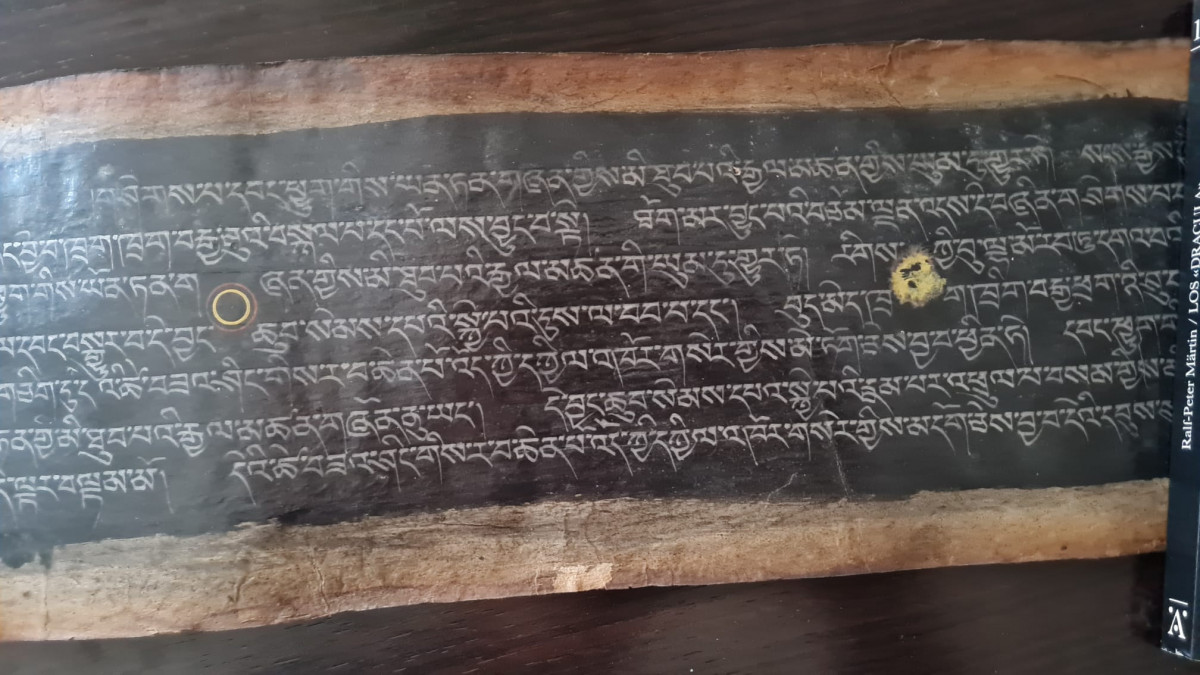
El manuscrito, caracterizado por su escritura en tinta blanca sobre fondo oscuro, actúa como un ancla entre dos mundos. Mientras que las adquisiciones de los siglos XVIII y XXI consolidan la importancia intelectual de la colección, este legado específico introduce una dimensión de "monarquía sagrada". Shamballah, más que un lugar físico, se describe en estos folios como el origen de una gobernanza basada en la sabiduría pura.
Que un descendiente de los Borbón de la Marche sea el depositario de este conocimiento sugiere que la historia de la nobleza europea y la del Tíbet están unidas por hilos invisibles. Este patrimonio redefine el papel de la familia en la actualidad: no solo como herederos de una historia nobiliaria, sino como guardianes de una verdad que, según la profecía entregada a Manuel, será esencial para la configuración del mundo venidero.
---------------
The Shamballah Legacy in the House of Bourbon: Spiritual Guardianship and the Link to the East
The history of the great European dynasties is typically written through diplomatic treaties and court chronicles. However, there exists a profound historical vein that connects Western aristocracy with the most hermetic mystical traditions of the East. Within this context, the heritage of the House of Bourbon de la Marche and the Bourbon-Conti stands out not only for its historical value but for the possession of objects that transcend mere bibliographic curiosity, serving as testimonies to a long-range spiritual mission.
While a considerable portion of the ancient Buddhist texts held by these branches of the family were acquired during the 18th and 21st centuries—periods representing both the height of Enlightenment interest in Asia and the contemporary recovery of treasures dispersed in international auctions—one specific piece stands radically apart from this academic or commercial origin. This manuscript’s provenance is not an art catalogue, but rather a direct and sacred transmission occurring in an unexpected geopolitical setting.
The Encounter in Ukraine: Manuel and the Guardian of Mysteries
The account of this particular text is set in the vast plains of Ukraine, a territory that has historically served as a bridge between Christendom and the steppes of Central Asia. It was there that Manuel, great-grandfather and a key figure in this chronicle, received from the hands of a Guardian Lama of Shamballah a manuscript of incalculable symbolic power.
Unlike texts acquired through collecting, this object was handed over under a pact of guardianship. In the Tibetan tradition, certain texts known as Terma or "spiritual treasures" are not to be read merely as philosophy, but as mandates intended for specific individuals at turning points in history. The Lama, identified as a protector of the wisdom of Shamballah, did not deliver the text as a simple gift, but as an investiture for the lineage.
Guardianship of the New Kingdom and the Golden Horde Lineage
The delivery of the manuscript to Manuel in Ukrainian lands carried an implicit prophecy: the family would hold the guardianship of a "new kingdom." This concept, recurrent in the Kalachakra teachings, refers to a restorative authority that emerges to preserve order and wisdom in times of darkness.
This mandate of guardianship finds a striking historical and genealogical resonance in the family’s connection to the ancient sovereigns of the steppe. The recognition as Prince of the Golden Horde, granted by the descendants of Genghis Khan, serves as the historical framework sustaining the legitimacy of this mission. It is no coincidence that the meeting with the emissary of Shamballah took place in lands that once formed part of the vast Mongol domain, creating an indissoluble bond between the warrior legitimacy of the Khans and the spiritual legitimacy of the Himalayan masters.
Significance of the Text in the 21st Century
The manuscript, characterized by its white ink on a dark background, acts as an anchor between two worlds. While the acquisitions of the 18th and 21st centuries consolidate the intellectual importance of the collection, this specific legacy introduces a dimension of "sacred monarchy." Shamballah, more than a physical location, is described in these folios as the source of a governance based on pure wisdom.
That a descendant of the Bourbon de la Marche is the depositary of this knowledge suggests that the history of European nobility and that of Tibet are joined by invisible threads. This heritage redefines the role of the family today: not only as heirs to a noble history but as guardians of a truth that, according to the prophecy delivered to Manuel, will be essential for the configuration of the world to come.