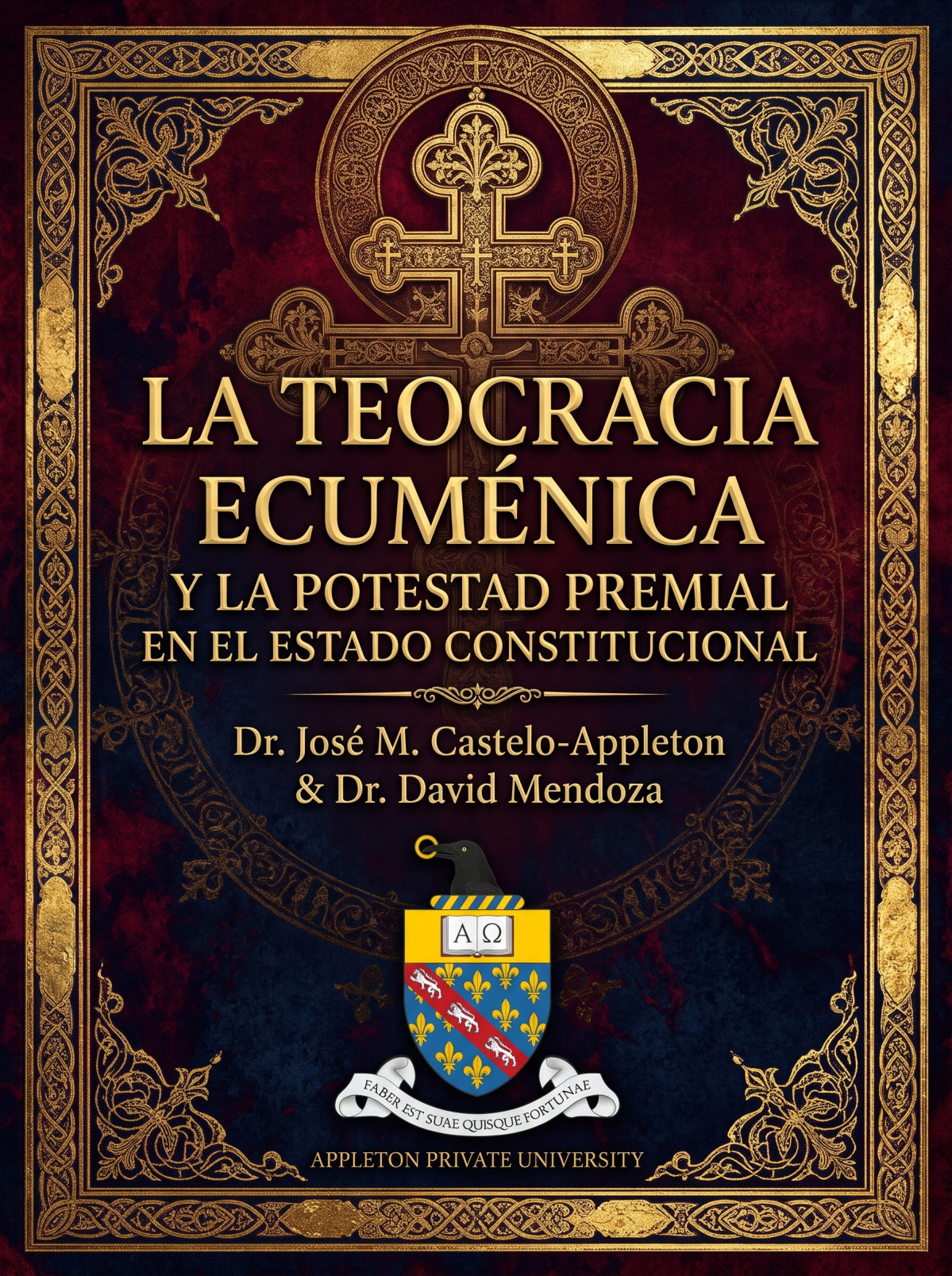
La Teocracia Ecuménica y la Potestad Premial en el Estado Constitucional
ART ESP / ING
La presente investigación examina la naturaleza ontológica, canónica y jurídico-positiva de la Teocracia Ecuménica y su facultad soberana para conceder distinciones honoríficas, corporaciones nobiliarias y títulos de nobleza ortodoxa en el marco del derecho contemporáneo
This study examines the ontological, canonical, and positive-legal nature of the Ecumenical Theocracy and its sovereign prerogative to confer honorary distinctions, nobiliary corporations, and titles of Orthodox nobility within contemporary constitutional law. Through an exhaustive documentary and dogmatic audit, this research addresses the institutional reality of the Proto-Eparchy of Iberia of the Holy Apostolic Primitive, Catholic, and Orthodox Church of the Syrian-Byzantine Rite, an ecclesiastical entity officially recorded under registration number 005581 in the Registry of Religious Entities of the Ministry of Justice of the Kingdom of Spain. The investigation demonstrates how state recognition under Organic Law 7/1980 on Religious Freedom, together with statutory approval granted via the Ministerial Order of July 26, 2006, consolidates an autonomous legal sphere and immunity from state coercion that shields its internal regime, including its specialized Heraldic College. Furthermore, this analysis articulates the convergence between Eastern canon law—grounded in the Byzantine principle of symphonia and the autocrat diarchy—and international dynastic law, embodied in the Head of the Dynasty, Prince, and Theocrat: His Royal and Imperial Highness the Prince of Bourbon-Conti and Bourbon de la Marche, Prince of Septimius-Bathzabbay and Tadmur. Empirical evidence reveals that the combination of administrative registry filings and European public notarial instruments (notably protocols 0272704215, 0280136139, and 0272808657) establishes a transnational legal framework. Consequently, honors and titles recorded through this ecclesiastical-dynastic structure are organically linked to the official protocol governed by public faith and the Ministry of Justice.