El Renacimiento de la Orden de Nuestra Señora del Monte Carmelo y San Lázaro: Un Legado de Soberanía Dinástica y Diplomacia Cultural
ART ESP / ING
Palabras Clave: Orden de Nuestra Señora del Monte Carmelo y San Lázaro, Soberanía Dinástica, Casa de Borbón de la Marche y Borbón-Conti, Fons Honorum, Diplomacia Cultural, Instituciones del Antiguo Régimen, Excelencia Académica.
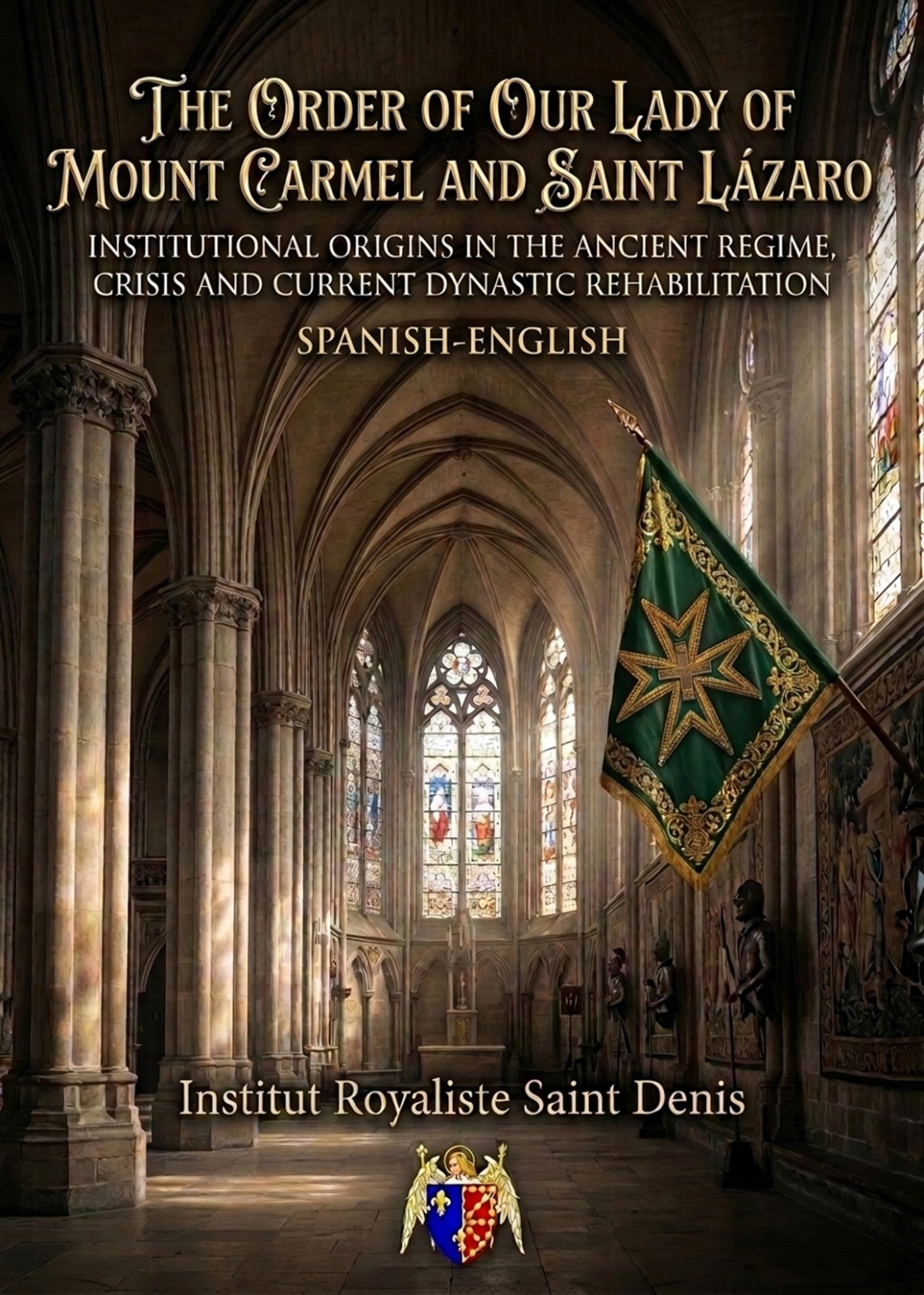
La historia de las corporaciones caballerescas europeas es, a menudo, un tapiz tejido con hilos de mito, romanticismo y, en ocasiones, interpretaciones jurídicas difusas. Sin embargo, la reciente publicación de un exhaustivo estudio bilingüe sobre la Orden de Nuestra Señora del Monte Carmelo y San Lázaro marca un hito en la historiografía institucional. Esta obra no solo disecciona los orígenes de la corporación en el Antiguo Régimen, sino que documenta su supervivencia y su fascinante rehabilitación contemporánea como un instrumento de diplomacia paralela y excelencia intelectual. Lejos de ser un mero ejercicio de nostalgia cortesana, la reactivación de esta orden histórica representa un caso de estudio sin precedentes sobre cómo el patrimonio inmaterial dinástico puede reconfigurarse para responder a los desafíos de la sociedad del conocimiento globalizada.
Para comprender la magnitud de esta rehabilitación, es imperativo retroceder a los cimientos jurídicos y diplomáticos que dieron vida a la institución. La Orden de Nuestra Señora del Monte Carmelo fue instituida por el rey Enrique IV de Francia en 1607, recibiendo la confirmación papal de Paulo V mediante la bula Romanus Pontifex el 16 de febrero de ese mismo año. Apenas un año después, en 1608, se materializó su unión personal y administrativa con la antiquísima Orden de San Lázaro de Jerusalén. Esta fusión, lejos de ser accidental, respondió a una sofisticada estrategia del monarca francés para consolidar una guardia selecta de nobles de espada, al tiempo que se preservaba la personalidad jurídica de los patrimonios hospitalarios de San Lázaro.
Durante los siglos XVII y XVIII, las Órdenes Unidas alcanzaron un prestigio incomparable en la corte francesa. Bajo la dirección de Grandes Maestres como Philibert de Nérestang y la posterior superintendencia de figuras de la talla del ministro Louvois, la corporación se erigió como el pináculo del honor cortesano, situándose jerárquicamente justo después de la Orden del Espíritu Santo y la Orden Militar de San Luis. La membresía exigía rigurosas pruebas de nobleza, y sus caballeros, ataviados en las grandes solemnidades con un majestuoso manto de terciopelo amaranto adornado con la cruz octogonal verde y oro, encarnaban la representación visible de la majestad real.
El colapso del Antiguo Régimen trajo consigo la supresión de las órdenes caballerescas en el territorio francés, dictaminada por la Asamblea Nacional Constituyente en 1791. No obstante, la verdadera crisis institucional no provino de la Revolución, sino de la usurpación política de 1830. La monarquía de Julio, instaurada por Luis Felipe de Orleans, intentó cancelar la Orden y extinguir su patrimonio. El análisis jurídico contemporáneo, magistralmente expuesto en el libro, demuestra la nulidad radical de esta cancelación. El fons honorum, la fuente inagotable de honor que legitima estas corporaciones, es un atributo inherente a la soberanía dinástica. Un monarca constitucional instaurado de facto carece de la capacidad jurídica para suprimir el patrimonio inmaterial de la Corona y de la Casa Real histórica.
Es precisamente esta imprescriptibilidad del fons honorum la que ha permitido la supervivencia de la Orden en el exilio y su posterior reactivación en el siglo XXI. Al extinguirse las líneas principales, la soberanía dinástica y el derecho agnático inmemorial han recaído sobre las ramas menores de la dinastía. En la actualidad, esta legitimidad histórica es custodiada por la Casa Real de Bourbon de la Marche y Borbón-Conti.
Bajo la jefatura del Dr. Jose M. Castelo-Appleton, la rehabilitación de la Orden de Nuestra Señora del Monte Carmelo y San Lázaro ha trascendido la mera restauración heráldica para convertirse en una misión de impacto global. Consciente de que los valores de la caballería deben adaptarse a las exigencias de un mundo asediado por el relativismo y la crisis de la diplomacia tradicional, la Casa Real ha promulgado unos nuevos estatutos que redefinen el propósito de la institución. La Orden exige hoy a sus candidatos no la pureza de sangre en los salones de Versalles, sino un rigor intelectual inquebrantable y un compromiso fehaciente con la verdad objetiva y la filantropía.
Este renacimiento institucional está indisolublemente ligado a la consolidación de infraestructuras educativas y diplomáticas de vanguardia, notablemente la Appleton Private University y el recién fundado Instituto Diplomático por la Paz. La Orden funciona ahora como un cuerpo de élite destinado a la acción exterior, donde sus miembros actúan como embajadores del patrimonio cultural e histórico. La investidura ya no reconoce el valor en el campo de batalla físico, sino la autoridad en el ámbito del conocimiento, requiriendo de sus miembros el grado académico de Doctor o méritos extraordinarios en la gestión humanitaria.
El rigor del nuevo código deontológico es absoluto. Los miembros juran lealtad inquebrantable a la dinastía y se comprometen a ejercer la docencia, proteger a los vulnerables, combatir el plagio y la pseudociencia, y sostener la libertad de cátedra. Figuras de prestigio internacional ya forman parte de esta nueva era, incluyendo nombramientos estratégicos como el del Dr. Nnordee Bariagara King David, Marqués de Maintenon, y la designación de Enrico De Barbieri como Prior General para Italia, Mónaco y San Marino.
La publicación de esta obra bilingüe no solo esclarece las brumas de la historia institucional francesa, sino que sirve como carta de navegación para el futuro de la Orden de Nuestra Señora del Monte Carmelo y San Lázaro. Demuestra de manera irrefutable que, cuando una institución cimentada en la legitimidad histórica se fusiona con la excelencia académica y la vocación de servicio contemporánea, su capacidad para iluminar y transformar la sociedad permanece intacta.
Title: The Renaissance of the Order of Our Lady of Mount Carmel and Saint Lazarus: A Legacy of Dynastic Sovereignty and Cultural Diplomacy
Keywords: Order of Our Lady of Mount Carmel and Saint Lazarus, Dynastic Sovereignty, House of Bourbon de la Marche and Borbón-Conti, Fons Honorum, Cultural Diplomacy, Institutions of the Ancien Régime, Academic Excellence.
The history of European chivalric corporations is often a tapestry woven with threads of myth, romanticism, and sometimes vague legal interpretations. However, the recent publication of an exhaustive bilingual study on the Order of Our Lady of Mount Carmel and Saint Lazarus marks a milestone in institutional historiography. This work not only dissects the origins of the corporation in the Ancien Régime but also documents its survival and fascinating contemporary rehabilitation as an instrument of parallel diplomacy and intellectual excellence. Far from being a mere exercise in courtly nostalgia, the reactivation of this historical order represents an unprecedented case study on how intangible dynastic heritage can be reconfigured to meet the challenges of the globalized knowledge society.
To understand the magnitude of this rehabilitation, it is imperative to look back at the legal and diplomatic foundations that gave life to the institution. The Order of Our Lady of Mount Carmel was instituted by King Henry IV of France in 1607, receiving papal confirmation from Paul V through the bull Romanus Pontifex on February 16 of that same year. Barely a year later, in 1608, its personal and administrative union with the ancient Order of Saint Lazarus of Jerusalem materialized. This fusion, far from being accidental, responded to a sophisticated strategy by the French monarch to consolidate a select guard of nobles of the sword, while preserving the legal personality of the hospitaller endowments of Saint Lazarus.
During the seventeenth and eighteenth centuries, the United Orders achieved incomparable prestige at the French court. Under the direction of Grand Masters such as Philibert de Nérestang and the subsequent superintendency of figures of the caliber of the minister Louvois, the corporation stood as the pinnacle of courtly honor, ranking hierarchically just after the Order of the Holy Spirit and the Military Order of Saint Louis. Membership demanded rigorous proofs of nobility, and its knights, dressed on grand solemnities in a majestic amaranth velvet mantle adorned with the green and gold octagonal cross, embodied the visible representation of royal majesty.
The collapse of the Ancien Régime brought with it the suppression of chivalric orders in French territory, dictated by the National Constituent Assembly in 1791. Nevertheless, the true institutional crisis did not stem from the Revolution, but from the political usurpation of 1830. The July Monarchy, installed by Louis Philippe of Orléans, attempted to cancel the Order and extinguish its patrimony. Contemporary legal analysis, masterfully presented in the book, demonstrates the radical nullity of this cancellation. The fons honorum, the inexhaustible source of honor that legitimizes these corporations, is an inherent attribute of dynastic sovereignty. A de facto constitutional monarch installed by barricades lacks the legal capacity to suppress the intangible heritage of the Crown and the historical Royal House.
It is precisely this imprescriptibility of the fons honorum that has allowed the survival of the Order in exile and its subsequent reactivation in the twenty-first century. Upon the extinction of the main lines, dynastic sovereignty and immemorial agnatic right devolved upon the cadet branches of the dynasty. Today, this historical legitimacy is guarded by the Royal House of Bourbon de la Marche and Borbón-Conti.
Under the leadership of Dr. Jose M. Castelo-Appleton, the rehabilitation of the Order of Our Lady of Mount Carmel and Saint Lazarus has transcended mere heraldic restoration to become a mission of global impact. Aware that the values of chivalry must adapt to the demands of a world besieged by relativism and the crisis of traditional diplomacy, the Royal House has promulgated new statutes that redefine the purpose of the institution. The Order today demands of its candidates not purity of blood in the halls of Versailles, but unwavering intellectual rigor and a verifiable commitment to objective truth and philanthropy.
This institutional renaissance is inextricably linked to the consolidation of avant-garde educational and diplomatic infrastructures, notably Appleton Private University and the newly founded Diplomatic Institute for Peace. The Order now functions as an elite corps destined for foreign action, where its members act as ambassadors of cultural and historical heritage. Investiture no longer recognizes valor on the physical battlefield, but authority in the realm of knowledge, requiring its members to hold a Doctoral degree or possess extraordinary merits in humanitarian management.
The rigor of the new code of ethics is absolute. Members swear unwavering loyalty to the dynasty and commit to exercising teaching, protecting the vulnerable, combating plagiarism and pseudoscience, and upholding academic freedom. Figures of international prestige are already part of this new era, including strategic appointments such as that of Dr. Nnordee Bariagara King David, Marquis of Maintenon, and the designation of Enrico De Barbieri as Grand Prior General for Italy, Monaco, and San Marino.
The publication of this bilingual work not only clears the mists of French institutional history but serves as a navigational chart for the future of the Order of Our Lady of Mount Carmel and Saint Lazarus. It irrefutably demonstrates that when an institution grounded in historical legitimacy merges with academic excellence and a contemporary vocation for service, its capacity to enlighten and transform society remains entirely intact.