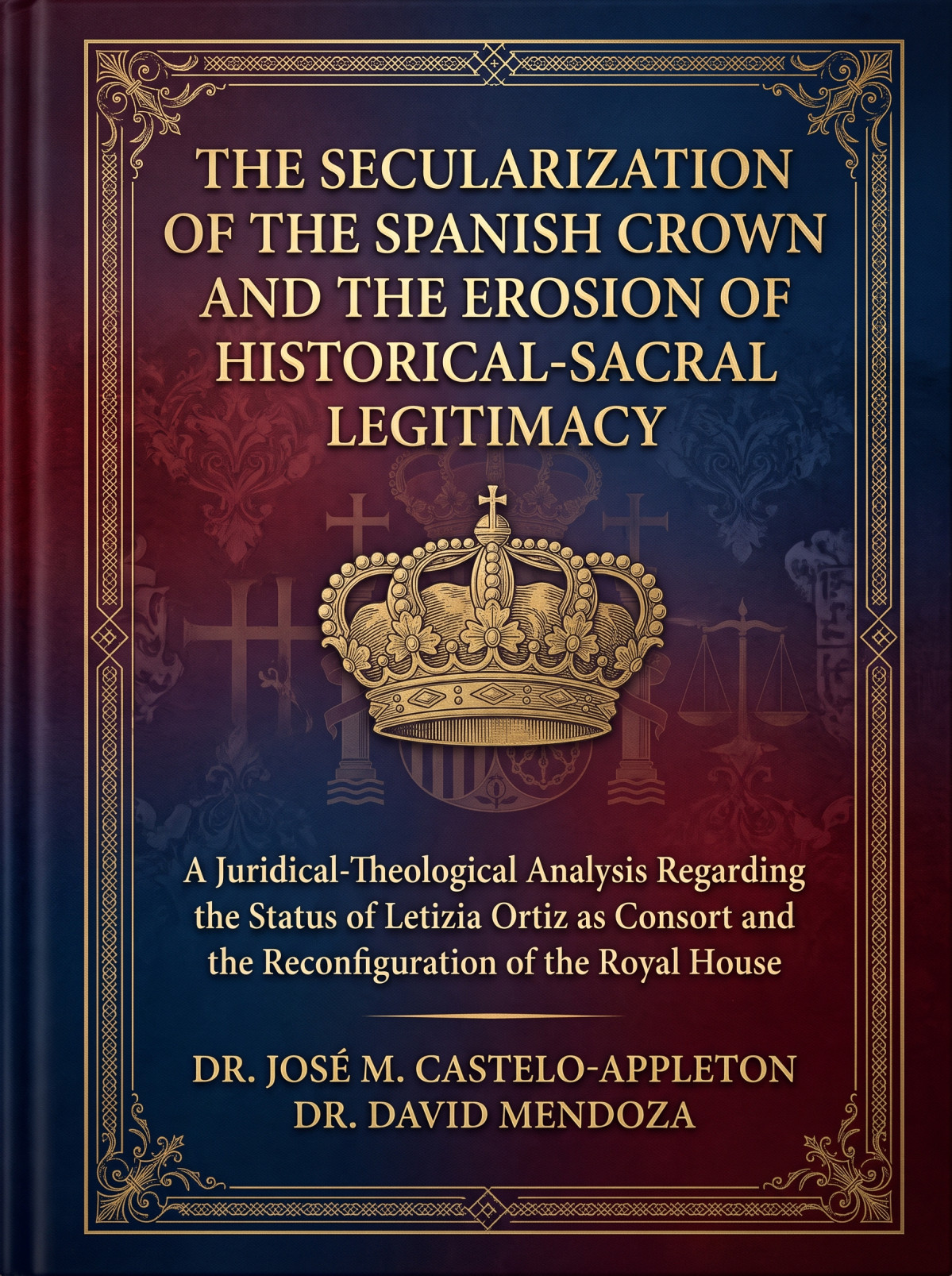
Un análisis jurídico-teológico a propósito del estatuto consorte de Letizia Ortiz y la reconfiguración de la Casa Real
ART ESP / ING
El presente estudio examina la disonancia ontológica y jurídica entre el fundamento histórico-sacral de la Monarquía Hispánica, históricamente vertebrado en torno al principio de la Católica Majestad, y su actual configuración secularizada bajo el régimen constitucional de 1978, focalizando el análisis en el impacto institucional y canónico derivado de la incorporación de la reina consorte Letizia Ortiz Rocasolano a la Casa Real española. A través de una metodología jurídico-dogmática, hermenéutica e histórico-crítica, se confrontan los postulados del derecho público eclesiástico, el Código de Derecho Canónico de 1983 y la tradición filosófico-política española con la praxis del positivismo normativista contemporáneo. El análisis demuestra que la asimilación de un matrimonio civil previo sin necesidad de nulidad eclesiástica mediante la aplicación restrictiva de la forma canónica (canon 1117), sumada a la progresiva neutralización simbólica y litúrgica en los actos de Estado, no constituye un mero ajuste protocolario o un ejercicio de privacidad amparado por la aconfesionalidad del artículo 16.3 de la Constitución Española. Por el contrario, representa una mutación sustancial en la antroposemiótica del poder regio que escinde la auctoritas moral e histórica de la potestas meramente funcional. Los resultados evidencian que la reducción de la Jefatura del Estado a un órgano burocrático desprovisto de vinculación trascendente vulnera la continuidad material de la legitimidad de ejercicio tradicional, generando una aporía insoluble entre la naturaleza hereditaria y simbólica de la institución monárquica y el racionalismo laicista que hoy rige el aparato estatal.
--------------
This study examines the ontological and juridical dissonance between the historical-sacral foundation of the Hispanic Monarchy—historically structured around the principle of Catholic Majesty—and its contemporary secularized configuration under the 1978 constitutional regime, focusing the analysis on the institutional and canonical impact resulting from the incorporation of Queen Consort Letizia Ortiz Rocasolano into the Spanish Royal House. Employing a juridical-dogmatic, hermeneutic, and historical-critical methodology, the postulates of public ecclesiastical law, the 1983 Code of Canon Law, and the Spanish philosophical-political tradition are confronted with the praxis of contemporary normativist positivism. The analysis demonstrates that the assimilation of a prior civil marriage without the requirement of ecclesiastical nullity through the restrictive application of canonical form (canon 1117), coupled with the progressive symbolic and liturgical neutralization in State ceremonies, does not represent a mere protocol adjustment or an exercise of privacy protected by the non-confessional status established in Article 16.3 of the Spanish Constitution. Rather, it represents a substantial mutation in the anthroposemiotics of royal power that severs moral and historical auctoritas from merely functional potestas. The findings demonstrate that the reduction of the Head of State to a bureaucratic organ devoid of transcendent ties undermines the material continuity of traditional legitimacy of exercise, generating an insoluble aporia between the hereditary and symbolic nature of the monarchical institution and the secularist rationalism that currently governs the state apparatus.