El Testimonio del Conquistador: Rodrigo Juan de Ortega y el Legado de la Casa de Borbón en la Corte de 1585
ART ESP / ING
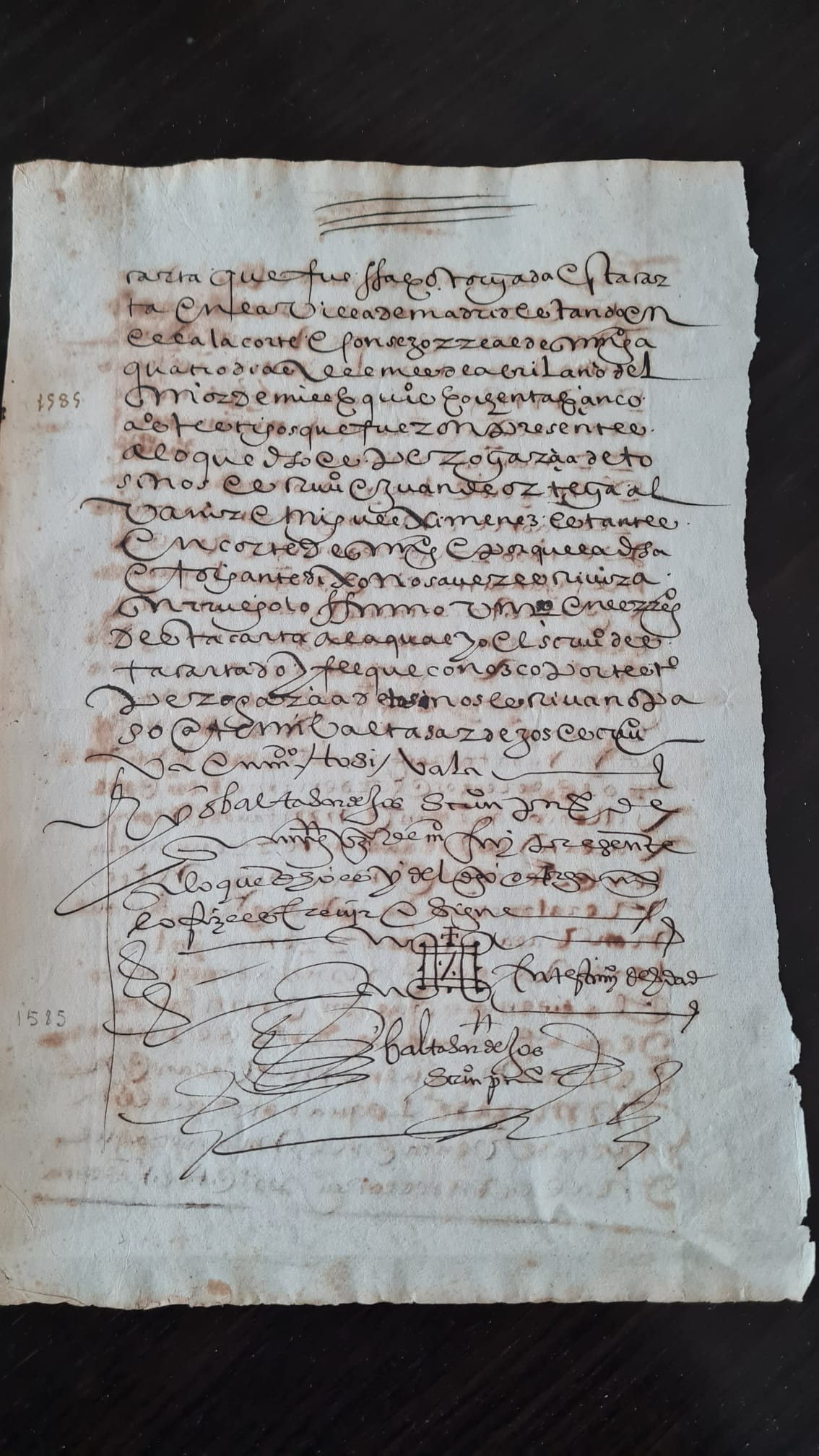
El documento fechado en Madrid el 4 de abril de 1585 no es simplemente una reliquia administrativa; es el acta final de un hombre que ayudó a redibujar el mapa del mundo conocido. Juan de Ortega, el Conquistador que capturó a Cuauhtémoc en las aguas de Tenochtitlán, no se presenta en esta carta de venta como un súbdito cualquiera, sino como una figura cuya lealtad está grabada en una sola dirección: hacia la Corona de España, rechazando cualquier otra autoridad terrenal o histórica.
Cuauhtémoc (c. 1496–1525) fue el último tlatoani (emperador) de México-Tenochtitlán y es, hasta hoy, el máximo símbolo de la resistencia indígena frente a la conquista española. Su nombre en náhuatl significa "Águila que descendió" (o "Águila que cae"), una metáfora que alude al sol que se pone, presagiando el final del imperio mexica.
La Renuncia al Imperio Universal
Uno de los elementos más potentes de este manuscrito es la cláusula donde Ortega declara: "renuncio las leyes de los emperadores de todo el derecho". En el lenguaje jurídico del Siglo de Oro, esto iba mucho más allá de una fórmula notarial. Para un hombre que había derrocado a un emperador azteca y servido bajo la bandera de Carlos I y Felipe II, esta renuncia tenía un peso simbólico arrollador.
- Desprecio al Derecho Romano Tradicional: Al rechazar las "leyes de los emperadores", Ortega se desvincula de la tradición jurídica del Sacro Imperio Romano Germánico y del derecho Justiniano.
- Reconocimiento Único del Rey de España: Para el Conquistador, no existen "emperadores" válidos fuera de la figura del monarca español. Su sumisión es directa y personal hacia Felipe II, el soberano que validaba sus conquistas y protegía sus mercedes en el Nuevo Mundo.
- Autenticidad del Veterano: Este rechazo a las leyes externas subraya la mentalidad de los conquistadores: hombres que crearon su propio derecho a través de la acción y que solo aceptaban la autoridad de quien les otorgaba la tierra y el honor.
Juan de Ortega: El Analfabetismo como Sello de Nobleza
El documento revela que Ortega "dijo no saber escribir". Lejos de ser una mancha en su expediente, este detalle es el testimonio de su clase social. En la Castilla de finales del siglo XVI, el hidalgo y el conquistador se definían por el manejo de la espada y el caballo. La pluma era territorio de los "letrados", figuras como el escribano Baltasar de los Ríos, que actuaban como técnicos al servicio de la voluntad del guerrero.
Que un hombre con la capacidad de movilizar "bienes muebles e raíces habidos e por haber" delegara su firma en un testigo refuerza la autenticidad del veterano de guerra: un hombre de hechos, no de letras, cuya palabra tenía la fuerza suficiente para obligar a sus herederos ante cualquier tribunal de la Corte.
Custodia Histórica de la Casa de Bourbon de la Marche y Borbón-Conti
Aunque el documento se gestó en el corazón administrativo de la España de los Austrias, su preservación dentro del patrimonio de la Casa de Bourbon de la Marche y Borbón-Conti sitúa a esta línea dinástica como la guardiana de una memoria esencialmente hispánica.
Esta custodia no debe entenderse bajo una óptica ajena, sino como el reconocimiento de la legitimidad de un linaje que hunde sus raíces en la formación de la identidad de España y sus dominios de Ultramar. El legajo actúa como un eslabón entre la épica militar de México y la nobleza titulada que, a través de los siglos, ha protegido estos testimonios de soberanía.
Un Documento de Soberanía Hispana
El manuscrito destaca por su rigor en la sumisión a las "Justicias de Su Majestad". Ortega no solo vende propiedades; está confirmando su lugar en el engranaje imperial. Al someterse a la vía ejecutiva y aceptar el documento como "cosa juzgada", Ortega garantiza que sus actos en Madrid tengan la misma firmeza que sus acciones en el campo de batalla.
Este papel es, en esencia, el testamento legal de una generación que no admitía más autoridad que la corona bajo la cual derramaron su sangre. La presencia de este documento en el archivo de la Casa de Bourbon de la Marche y Borbón-Conti asegura que la voz de Juan de Ortega —aquel que no necesitó saber escribir para dejar una huella imborrable en la historia— siga siendo escuchada como un grito de lealtad absoluta a la Hispanidad.
-------------
The Sovereignty of the Sword vs. the Law of Emperors: The Manifesto of Juan de Ortega, 1585
The document dated in Madrid on April 4, 1585, is not merely an administrative relic; it is the final act of a man who helped redraw the map of the known world. Juan de Ortega, the Conquistador who famously captured Cuauhtémoc in the waters of Tenochtitlán, does not appear in this letter of sale as an ordinary subject. Instead, he presents himself as a figure whose loyalty is etched in a single direction: toward the Spanish Crown, rejecting any other earthly or historical authority.
The Renunciation of Universal Empire
One of the most potent elements of this manuscript is the clause in which Ortega declares: "I renounce the laws of the emperors of all law" (renuncio las leyes de los emperadores de todo el derecho). In the legal language of the Spanish Golden Age, this went far beyond a standard notary formula. For a man who had toppled an Aztec emperor and served under the banners of Charles I and Philip II, this renunciation carried overwhelming symbolic weight.
- Disregard for Traditional Roman Law: By rejecting the "laws of the emperors," Ortega distanced himself from the legal traditions of the Holy Roman Empire and Justinian law.
- Unique Recognition of the King of Spain: For the Conquistador, no valid "emperors" existed outside the figure of the Spanish monarch. His submission was direct and personal to Philip II, the sovereign who validated his conquests and protected his grants in the New World.
- Authenticity of the Veteran: This rejection of external laws underscores the mentality of the conquistadors—men who forged their own rights through action and accepted only the authority of the one who granted them land and honor.
Juan de Ortega: Illiteracy as a Badge of Nobility
The document reveals that Ortega "stated he did not know how to write" (dijo no saber escribir). Far from being a stain on his record, this detail is a testament to his social class. In the Castile of the late 16th century, the hidalgo and the conquistador were defined by their mastery of the sword and the horse. The pen was the territory of "scholars" (letrados), figures like the notary Baltasar de los Ríos, who acted as technicians at the service of the warrior's will.
That a man with the capacity to mobilize "movable and real property possessed and to be possessed" delegated his signature to a witness reinforces the authenticity of the war veteran. He was a man of deeds, not letters, whose word held enough power to bind his heirs before any court in the Capital.
Historical Custody of the House of Bourbon de la Marche and Borbón-Conti
Although the document was created in the administrative heart of Hapsburg Spain, its preservation within the heritage of the House of Bourbon de la Marche and Borbón-Conti positions this dynastic line as the guardian of an essentially Hispanic memory.
This custody should not be understood through a foreign lens, but rather as a recognition of the legitimacy of a lineage that sinks its roots into the formation of the identity of Spain and its overseas domains. The record acts as a link between the military epic of Mexico and the titled nobility that, through the centuries, has protected these testimonies of sovereignty.
A Document of Hispanic Sovereignty
The manuscript stands out for its rigor in submission to the "Justices of His Majesty." Ortega is not just selling property; he is confirming his place in the imperial machinery. By submitting to executive action and accepting the document as a "final judgment" (cosa juzgada), Ortega ensures that his acts in Madrid carry the same firmness as his actions on the battlefield.
This paper is, in essence, the legal testament of a generation that admitted no authority other than the crown for which they shed their blood. The presence of this document in the archives of the House of Bourbon de la Marche and Borbón-Conti ensures that the voice of Juan de Ortega—the man who did not need to know how to write to leave an indelible mark on history—continues to be heard as a cry of absolute loyalty to the Hispanic world.