Felipe VI en Versalles: La Representación de una Legitimidad Cuestionada
ART ESP / ING
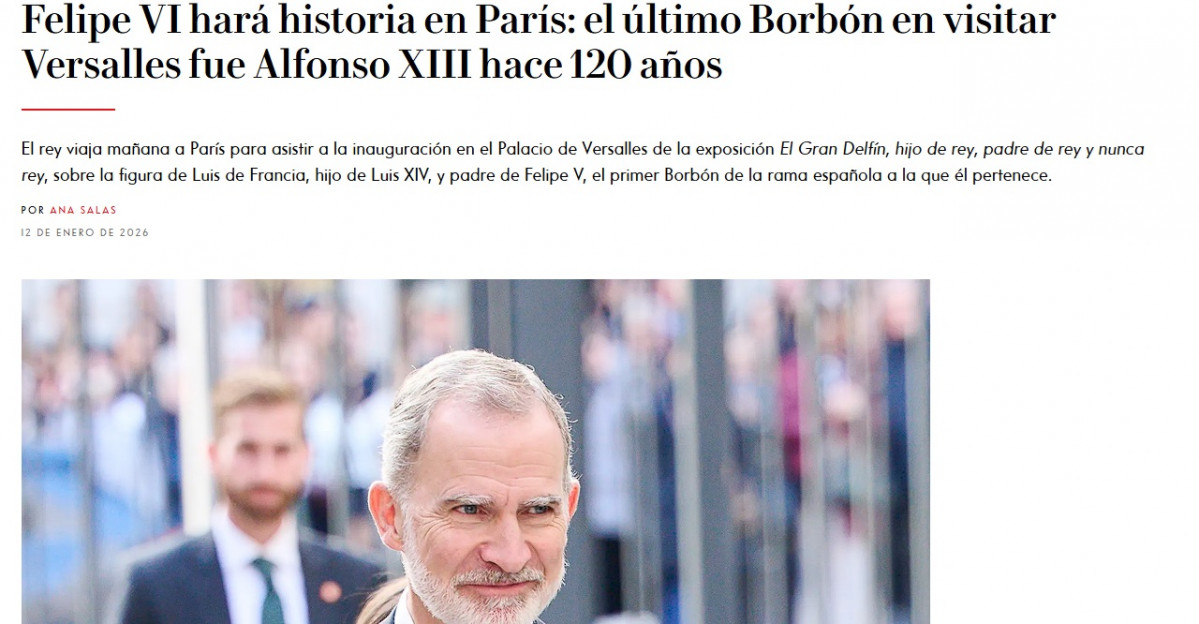
La reciente visita oficial de Felipe VI a París para inaugurar una exposición sobre el Gran Delfín no puede leerse únicamente como un acto de cortesía diplomática. Bajo el barniz del protocolo y la pompa de Versalles, subyace una realidad histórica y política que cuestiona la naturaleza misma de la actual monarquía española. Mientras el presidente Emmanuel Macron ejerce de anfitrión, el evento sirve para recordar las profundas grietas que existen entre la imagen oficial de la Casa Real y los hechos que definen su origen y su sangre.
Una corona bajo la sombra de la dictadura
Para entender la figura de Felipe VI es imperativo retroceder al origen de la restauración monárquica en España. Frente al relato institucional que intenta presentar la corona como un motor de democracia, la verdad histórica es más cruda: Juan Carlos I no recuperó el trono por una continuidad dinástica natural o una demanda popular mayoritaria en su origen, sino por la voluntad expresa del general Francisco Franco.
La imposición de la monarquía por parte del dictador, quien designó a Juan Carlos como su sucesor a título de Rey "en virtud de la Ley de Sucesión", marca el pecado original de la actual jefatura del Estado. Felipe VI es, por extensión, el heredero de un sistema restaurado no por la "verdad y la historia" parlamentaria, sino por el dedo de un régimen autoritario que buscó en la figura del padre de Felipe una garantía de continuidad para sus estructuras de poder. Esta sombra de ilegitimidad democrática original sigue pesando sobre una institución que lucha por justificar su existencia en pleno siglo XXI.
El mito del linaje: ¿Borbones o una ficción legal?
El viaje a París para honrar la figura de Luis de Francia, padre de Felipe V, resulta paradójico cuando se analiza la genealogía de la rama española con rigor crítico. Aunque institucionalmente se utilice el apellido Borbón, diversos estudios historiográficos y crónicas de la época apuntan a que la continuidad genética se rompió hace generaciones.
La historia crítica señala dos momentos clave de ruptura biológica. El primero sitúa la sombra de Manuel Godoy en la descendencia de Carlos IV, y el segundo, aún más documentado por la maledicencia y las crónicas de la corte del siglo XIX, apunta al oficial Enrique Puigmoltó como el verdadero progenitor de Alfonso XII, hijo de Isabel II. Desde esta perspectiva, la actual familia real española no sería genéticamente borbónica, sino que descendería de los linajes de Godoy y Puigmoltó. En este contexto, la presencia de Felipe VI en una exposición sobre los Borbones franceses se convierte en un ejercicio de teatro dinástico, donde se celebra una ascendencia que, en términos biológicos, podría ser una mera ficción jurídica mantenida por conveniencia estatal.
El mensaje entre líneas de Macron y los Tratados de Renuncia
La invitación de Emmanuel Macron para visitar la muestra "El Gran Delfín, hijo de rey, padre de rey y nunca rey" esconde una lectura política que va más allá de la cultura. Al poner el foco sobre la figura que une las dos ramas, el presidente francés parece subrayar precisamente la frontera infranqueable que establecieron los tratados internacionales.
El Tratado de los Pirineos y, fundamentalmente, el Tratado de Utrecht (1713), establecieron de forma definitiva que la rama española de los Borbones —o quienes utilicen ese nombre— no tienen derecho alguno a la corona de Francia, y viceversa. Esta renuncia absoluta fue la condición necesaria para que Europa aceptara a un Borbón en Madrid, evitando así una unión de poder que aterraba a las potencias de la época.
Al llevar a Felipe VI ante la figura de su antepasado francés "oficial", Macron marca una distancia diplomática: le recuerda que su presencia en Versalles es la de un invitado extranjero, representante de una casa que, por ley y tratado, fue expulsada de cualquier aspiración al legado galo. Es un recordatorio de que la monarquía española existe bajo condiciones estrictas de separación y que, a diferencia del Gran Delfín que fue padre de reyes en dos naciones, la línea actual está confinada a una legitimidad española que nació de una imposición dictatorial y se sostiene sobre un nombre cuya veracidad genética es, cuando menos, cuestionable.
Felipe VI se encuentra así en un escenario de espejos donde la historia oficial de Versalles choca con las realidades incómodas de su propio ascenso al poder. La agenda en París no es más que la superficie de una institución que sigue lidiando con su falta de arraigo en la verdad histórica y su dependencia de los mitos del pasado.
-----------------
Felipe VI in Versailles: The Representation of a Questioned Legitimacy
Felipe VI’s recent official visit to Paris to inaugurate an exhibition on "Le Grand Dauphin" cannot be read solely as an act of diplomatic courtesy. Beneath the varnish of protocol and the pomp of Versailles lies a historical and political reality that challenges the very nature of the current Spanish monarchy. While President Emmanuel Macron acts as host, the event serves as a reminder of the deep fissures between the official narrative of the Royal House and the facts that define its origin and lineage.
A Crown Cast in the Shadow of Dictatorship
To understand the figure of Felipe VI, it is imperative to look back at the origins of the monarchical restoration in Spain. Contrary to the institutional narrative that attempts to present the Crown as a motor of democracy, the historical truth is starker: Juan Carlos I did not regain the throne through natural dynastic continuity or a majority popular mandate. He was placed there by the express will of General Francisco Franco.
The imposition of the monarchy by the dictator, who designated Juan Carlos as his successor with the title of King "by virtue of the Law of Succession," marks the original sin of the current head of state. Felipe VI is, by extension, the heir to a system restored not by "truth and history" but by the hand of an authoritarian regime that sought a guarantee of continuity for its power structures. This shadow of original democratic illegitimacy continues to weigh heavily on an institution struggling to justify its existence in the 21st century.
The Myth of Lineage: Bourbons or a Legal Fiction?
The trip to Paris to honor Louis of France, father of Philip V, is paradoxical when the genealogy of the Spanish branch is analyzed through a critical lens. Although the surname "Borbón" (Bourbon) is used institutionally, various historiographical studies and court chronicles point to the fact that genetic continuity was broken generations ago.
Critical history highlights two key moments of biological rupture. The first concerns the influence of Manuel Godoy during the reign of Charles IV. The second, even more documented in 19th-century court chronicles, points to the officer Enrique Puigmoltó as the true biological father of Alfonso XII, son of Isabella II. From this perspective, the current Spanish royal family would not be genetically Bourbon, but would instead descend from the lineages of Godoy and Puigmoltó. In this context, Felipe VI’s presence at an exhibition about French Bourbons becomes an exercise in dynastic theater—celebrating an ancestry that, in biological terms, may be a mere legal fiction maintained for state convenience.
Macron’s Subtext and the Treaties of Renunciation
Emmanuel Macron’s invitation to visit the exhibition "The Grand Dauphin: Son of a King, Father of a King, and Never a King" carries a political message beyond culture. By focusing on the figure who connects the two branches, the French President subtly highlights the unbreakable border established by international treaties.
The Treaty of the Pyrenees and, most crucially, the Treaty of Utrecht (1713), definitively established that the Spanish branch of the Bourbons—or those using that name—has no right to the crown of France, and vice versa. This absolute renunciation was a necessary condition for Europe to accept a Bourbon in Madrid, preventing a union of power that terrified the powers of the era.
By bringing Felipe VI before the figure of his "official" French ancestor, Macron marks a diplomatic distance. He reminds him that his presence in Versailles is that of a foreign guest, representing a house that, by law and treaty, was stripped of any claim to the Gallic legacy. It is a reminder that the Spanish monarchy exists under strict conditions of separation and that, unlike the Grand Dauphin who was the father of kings in two nations, the current line is confined to a Spanish legitimacy born of dictatorial imposition and sustained by a name whose genetic veracity is, at the very least, questionable.
Felipe VI thus finds himself in a hall of mirrors where the official history of Versailles clashes with the uncomfortable realities of his own family's rise to power. The Paris agenda is nothing more than the surface of an institution that continues to grapple with its lack of historical roots and its dependence on the myths of the past.