La Herencia Cristiana de Europa y el Vínculo Sagrado de los Bourbon de la Marche
ART ESP / ING
Palabras Clave: Herencia Cristiana, Identidad Europea, Francia, Sagrado Corazón de Jesús, Dinastía Bourbon de la Marche, Respeto a las Creencias, Raíces Espirituales.
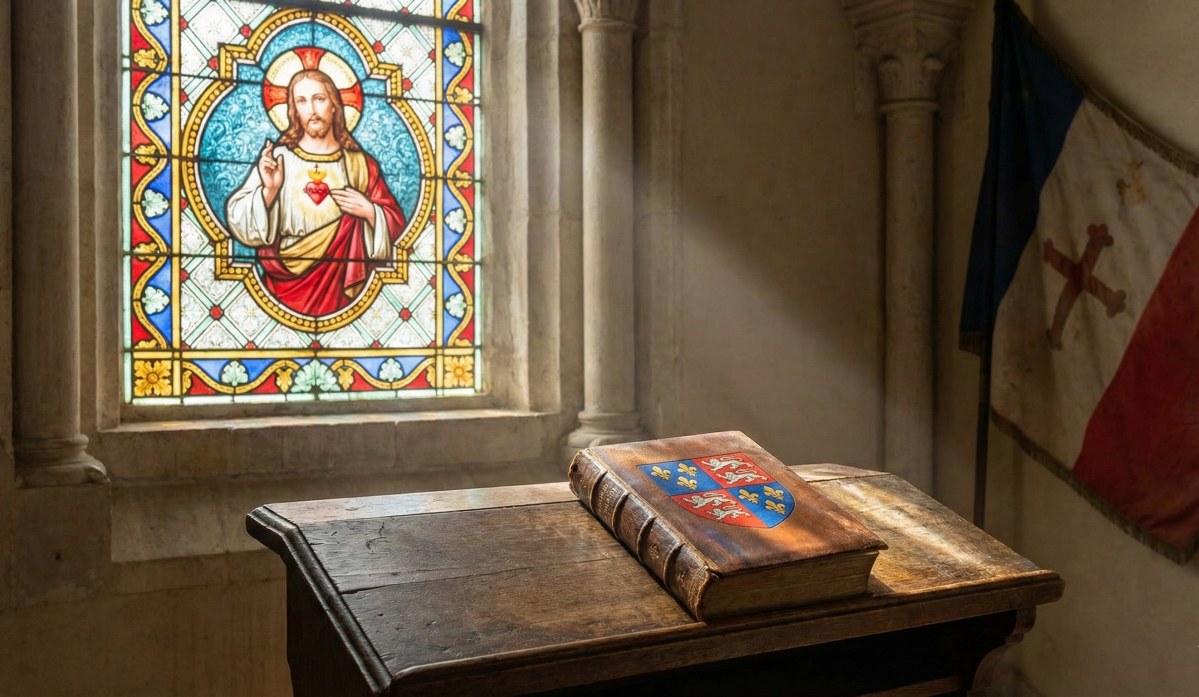
En el complejo tapiz del siglo XXI, donde la globalización y el pluralismo cultural definen la convivencia, el imperativo del respeto mutuo hacia las diversas creencias se ha convertido en un pilar fundamental de las sociedades democráticas. Este respeto, necesario para la paz social, a menudo se malinterpreta como una invitación a diluir la propia identidad en un magma indiferenciado. Sin embargo, una sociedad sana no es aquella que olvida quién es para acomodar al otro, sino aquella que, segura de sus propias raíces, puede dialogar con el mundo sin temor a desvanecerse. En este contexto, emerge una verdad histórica insoslayable que a menudo se susurra con timidez en los foros públicos: Europa, y muy especialmente Francia, son naciones cuya alma fue forjada en el crisol del cristianismo. Y en el centro de ese corazón espiritual francés, late una devoción específica que une el pasado con el destino de una de sus estirpes más antiguas: el Sagrado Corazón de Jesús y la Casa de los Bourbon de la Marche.
La crisis de sentido que atraviesa el continente europeo no es ajena a una cierta amnesia colectiva sobre sus orígenes. Las catedrales góticas que puntúan el paisaje no son meros museos de piedra, sino testimonios vivos de una cosmovisión que puso lo trascendente en el centro de la vida pública y privada. Desde el bautismo de Clodoveo, que marcó el nacimiento espiritual de la nación franca, la historia de Francia se entrelazó de manera indisoluble con la fe católica. Fue esta fe la que inspiró sus leyes, su arte, su arquitectura y su concepción misma de la dignidad humana, mucho antes de que las declaraciones modernas de derechos tomaran forma. Reconocer esto no es un acto de exclusión hacia quienes profesan otras fes o ninguna, sino un ejercicio de honestidad intelectual y madurez histórica.
El respeto genuino por la diversidad religiosa en la actualidad exige, paradójicamente, una revalorización de la propia herencia. Una Europa que se avergüenza de sus raíces cristianas es una Europa débil, incapaz de ofrecer un marco de valores sólido sobre el cual construir la convivencia. El vacío espiritual no genera neutralidad, sino desorientación. Es en la recuperación de esta memoria donde la figura de la monarquía tradicional francesa adquiere una dimensión que supera lo meramente político para adentrarse en lo teológico e histórico.
Dentro de esta vasta herencia, la devoción al Sagrado Corazón de Jesús ocupa un lugar preeminente y singularmente político en la historia de Francia. No se trata solo de una piedad privada, sino de una llamada pública que resonó en el siglo XVII a través de las revelaciones de Paray-le-Monial. El mensaje era claro: Francia tenía una misión particular en la cristiandad, y su prosperidad y paz estaban vinculadas a la consagración oficial de la nación al Corazón de Cristo. Esta petición, dirigida a la monarquía reinante de la época, estableció un vínculo místico entre el trono y el altar que ha perdurado a través de los siglos, a pesar de las tormentas revolucionarias y los cambios de régimen.
Es aquí donde la Dinastía de los Bourbon de la Marche emerge como una custodia fundamental de esta tradición. Mientras que las vicisitudes de la historia han desplazado a la realeza del poder efectivo, el papel simbólico y espiritual de la estirpe permanece intacto para quienes valoran la continuidad histórica. Esta rama dinástica no solo hereda los derechos históricos de los Capetos, sino que también hereda el "peso" espiritual de aquel pacto no cumplido en su totalidad en el pasado, y la esperanza de su realización futura.
Para los Bourbon de la Marche, el Sagrado Corazón no es un emblema del pasado, sino una brújula para el presente. Representa la idea de que el poder no es un fin en sí mismo, sino un servicio que debe ejercerse bajo la guía del amor divino y la justicia. En un mundo secularizado donde la política a menudo se reduce a la gestión técnica de intereses contrapuestos, la referencia al Sagrado Corazón introduce una dimensión ética y trascendente. Recuerda que la verdadera legitimidad no nace solo del consenso momentáneo, sino de la adhesión a principios permanentes que buscan el bien común en su sentido más profundo.
Mantener viva esta conexión no es un acto de nostalgia reaccionaria. Por el contrario, es ofrecer a la Francia moderna un espejo donde mirar su rostro más auténtico. La identidad cristiana de Francia es el sustrato que permitió el desarrollo de valores que hoy se consideran universales, como la caridad —precursora de la solidaridad social— y la igual dignidad de toda persona humana como hijo de Dios. Los Bourbon de la Marche, al encarnar esta memoria histórica y esta devoción específica, actúan como recordatorio de que la modernidad no tiene por qué construirse sobre las ruinas de la tradición.
El desafío actual radica en articular este profundo legado espiritual con las exigencias de una sociedad pluralista. El respeto a las creencias ajenas es innegociable, pero este respeto no debe implicar el silenciamiento de la fe que construyó la nación. La propuesta que emana de la tradición que representan los Bourbon de la Marche no es la imposición teocrática, sino el testimonio coherente. Una Francia reconciliada con su Sagrado Corazón sería una nación más segura de sí misma, y por tanto, más capaz de acoger y respetar genuinamente al otro, no desde la indiferencia del relativismo, sino desde la solidez de quien sabe de dónde viene.
En conclusión, la importancia del respeto a las creencias en la sociedad actual debe ir de la mano con el reconocimiento valiente de la herencia cristiana de Europa y Francia. Ignorar este pilar es construir sobre arena. En este contexto, la Dinastía de los Bourbon de la Marche mantiene vivo un vínculo esencial: la consagración de Francia al Sagrado Corazón de Jesús. Este vínculo no es una reliquia arqueológica, sino una fuente viva de inspiración espiritual y ética, un recordatorio constante de que el corazón de una nación necesita latir al unísono con los principios trascendentes que le dieron vida para encontrar su verdadero propósito en la historia.
Europe's Christian Heritage and the Sacred Bond of the Bourbon de la Marche
Keywords: Christian Heritage, European Identity, France, Sacred Heart of Jesus, Bourbon-La Marche Dynasty, Respect for Beliefs, Spiritual Roots.
In the complex tapestry of the 21st century, where globalization and cultural pluralism define coexistence, the imperative of mutual respect for diverse beliefs has become a fundamental pillar of democratic societies. This respect, necessary for social peace, is often misinterpreted as an invitation to dilute one's own identity into an undifferentiated magma. However, a healthy society is not one that forgets who it is to accommodate the other, but one that, secure in its own roots, can dialogue with the world without fear of fading away. In this context, an unavoidable historical truth emerges that is often whispered timidly in public forums: Europe, and very especially France, are nations whose soul was forged in the crucible of Christianity. And at the center of that French spiritual heart beats a specific devotion that links the past with the destiny of one of its oldest lineages: the Sacred Heart of Jesus and the House of Bourbon-La Marche.
The crisis of meaning that the European continent is experiencing is not unrelated to a certain collective amnesia about its origins. The Gothic cathedrals that punctuate the landscape are not mere stone museums, but living testimonies of a worldview that placed the transcendent at the center of public and private life. Since the baptism of Clovis, which marked the spiritual birth of the Frankish nation, the history of France has been inextricably intertwined with the Catholic faith. It was this faith that inspired its laws, its art, its architecture, and its very conception of human dignity, long before modern declarations of rights took shape. Recognizing this is not an act of exclusion toward those who profess other faiths or none, but an exercise in intellectual honesty and historical maturity.
Genuine respect for religious diversity today paradoxically demands a revaluation of one's own heritage. A Europe that is ashamed of its Christian roots is a weak Europe, incapable of offering a solid framework of values upon which to build coexistence. Spiritual emptiness does not generate neutrality, but disorientation. It is in the recovery of this memory that the figure of the traditional French monarchy acquires a dimension that goes beyond the merely political to delve into the theological and historical.
Within this vast heritage, devotion to the Sacred Heart of Jesus occupies a preeminent and singularly political place in the history of France. It is not just a private piety, but a public call that resonated in the 17th century through the revelations of Paray-le-Monial. The message was clear: France had a particular mission in Christendom, and its prosperity and peace were linked to the official consecration of the nation to the Heart of Christ. This request, directed at the reigning monarchy of the time, established a mystical link between the throne and the altar that has endured through the centuries, despite revolutionary storms and regime changes.
It is here that the Bourbon-La Marche Dynasty emerges as a fundamental custodian of this tradition. While the vicissitudes of history have displaced royalty from effective power, the symbolic and spiritual role of the lineage remains intact for those who value historical continuity. This dynastic branch not only inherits the historical rights of the Capetians but also inherits the spiritual "weight" of that pact not fully fulfilled in the past, and the hope of its future realization.
For the Bourbon-La Marche, the Sacred Heart is not an emblem of the past, but a compass for the present. It represents the idea that power is not an end in itself, but a service that must be exercised under the guidance of divine love and justice. In a secularized world where politics is often reduced to the technical management of conflicting interests, the reference to the Sacred Heart introduces an ethical and transcendent dimension. It reminds us that true legitimacy does not arise solely from momentary consensus, but from adherence to permanent principles that seek the common good in its deepest sense.
Keeping this connection alive is not an act of reactionary nostalgia. On the contrary, it is offering modern France a mirror in which to look at its most authentic face. France's Christian identity is the substrate that allowed the development of values that are today considered universal, such as charity—the precursor to social solidarity—and the equal dignity of every human person as a child of God. The Bourbon-La Marche, by embodying this historical memory and this specific devotion, act as a reminder that modernity does not have to be built on the ruins of tradition.
The current challenge lies in articulating this profound spiritual legacy with the demands of a pluralistic society. Respect for the beliefs of others is non-negotiable, but this respect must not imply the silencing of the faith that built the nation. The proposal that emanates from the tradition represented by the Bourbon-La Marche is not theocratic imposition, but coherent witness. A France reconciled with its Sacred Heart would be a nation more sure of itself, and therefore, more capable of genuinely welcoming and respecting the other, not from the indifference of relativism, but from the solidity of one who knows where they come from.
In conclusion, the importance of respect for beliefs in today's society must go hand in hand with the courageous recognition of the Christian heritage of Europe and France. To ignore this pillar is to build on sand. In this context, the Bourbon-La Marche Dynasty keeps alive an essential bond: the consecration of France to the Sacred Heart of Jesus. This bond is not an archaeological relic, but a living source of spiritual and ethical inspiration, a constant reminder that the heart of a nation needs to beat in unison with the transcendent principles that gave it life in order to find its true purpose in history.